
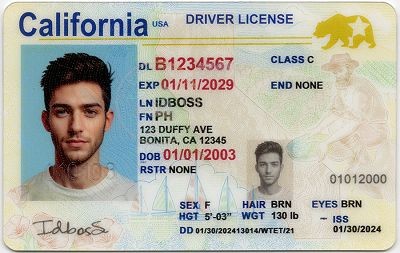
Scannable California Identification Cards: Durability Guide
Understanding how scannable California identification cards for sale in California, combine material strength and digital security has become vital for compliance managers, venue operators, and security professionals. Modern credential designs rely on advanced physical substrates and machine-readable data layers to stop alteration attempt.
Failing to verify state identity standards can lead to costly security breaches and compliance failures. This guide explores the physical durability, optical security features, and digital parsing technologies built into modern California driver’s licenses and state IDs.
1. Why Fused Polycarbonate Sets the Durability Standard
Traditional PVC card body structures can split, peel, or warp when exposed to heat or daily wear. In contrast, modern state credentials utilize 100% fused polycarbonate layers.
Polycarbonate construction provides critical durability benefits:
- Inseparable Layering: High heat and pressure fuse internal card layers without adhesives, preventing physical lamination peeling.
- Tamper Evidence: Attempting to alter card graphics destroys the structural core, leaving clear evidence of tampering.
- Tactile Laser Engraving: Personal details and dates are laser-engraved directly into internal layers, creating a distinct raised texture.
Deploying these durable card bodies ensures credentials withstand heavy daily usage while maintaining security integrity.
2. Machine-Readable Zones and 2D Barcode Parsing
The back of modern California identification credentials features high-density 2D PDF417 barcodes. This machine-readable zone stores structured biographical data matching front-facing card details.
Hardware scanners parse this data instantly to verify key factors:
| Verification Stage | Technical Method | Security Benefit |
| Data Consistency | Matches front text against encoded PDF417 barcode strings. | Detects surface alterations and data discrepancies. |
| Digital Signatures | Validates cryptographic payload signatures built into state barcodes. | Confirms data authenticity directly from issuing authorities. |
| Age Calculation | Calculates exact expiration and birth dates automatically. | Eliminates manual math errors during access checks. |
Because counterfeit credentials often contain formatting errors, implementing [PDF417 barcode verification tools] catches unauthorized card entries quickly.
3. Optical Security Features and Multi-Spectral Verification
In addition to barcode parsing, physical credentials feature complex visual security elements. High-end verification hardware inspects cards across multiple light spectrums to confirm authenticity.
Security teams rely on [optical identity verification devices] to evaluate several key optical elements:
- Microprinting: Hair-thin lines reveal repeating text strings under magnification.
- Ultraviolet (UV) Patterns: Hidden state logos and photo overlays react under UV light wavelengths.
- Laser Perforations: Laser-drilled pinholes form state shapes when held against bright light sources.
Combining these light frequencies allows security personnel to distinguish genuine polycarbonate substrate from cheap plastic counterfeits.
4. Mobile Driver’s Licenses (mDL) and Future Authentication
The growth of mobile driver’s licenses (mDL) offers a digital alternative to physical card inspection. Governed by international standards like the ISO/IEC 18013-5 mDL standard guidelines, digital IDs allow users to present cryptographically signed age proofs.
By adopting [cryptographic mobile driver’s license systems], compliance teams complement physical card checks with real-time digital verification.
Additionally, organizations processing high customer volumes incorporate [automated compliance management solutions] to maintain seamless security records.
Frequently Asked Questions
What makes polycarbonate ID cards more durable than PVC?
Polycarbonate ID cards fuse multiple plastic layers together under high heat and pressure without adhesives. This creates a single solid structure that cannot peel, warp, or crack during daily use.
How do 2D barcodes store California ID data?
The PDF417 barcode on the back of a California ID encodes biographical details, license numbers, and digital signatures matching state DMV standards. Scanners read this data to detect tampering or syntax errors instantly.
Are standard California IDs as secure as REAL IDs?
Yes. Both standard California IDs and REAL IDs use the exact same polycarbonate body materials, laser engraving, microprinting, and PDF417 barcode structures. The only visual difference is the golden bear emblem on REAL IDs.